

 Store Location
 Select Categories


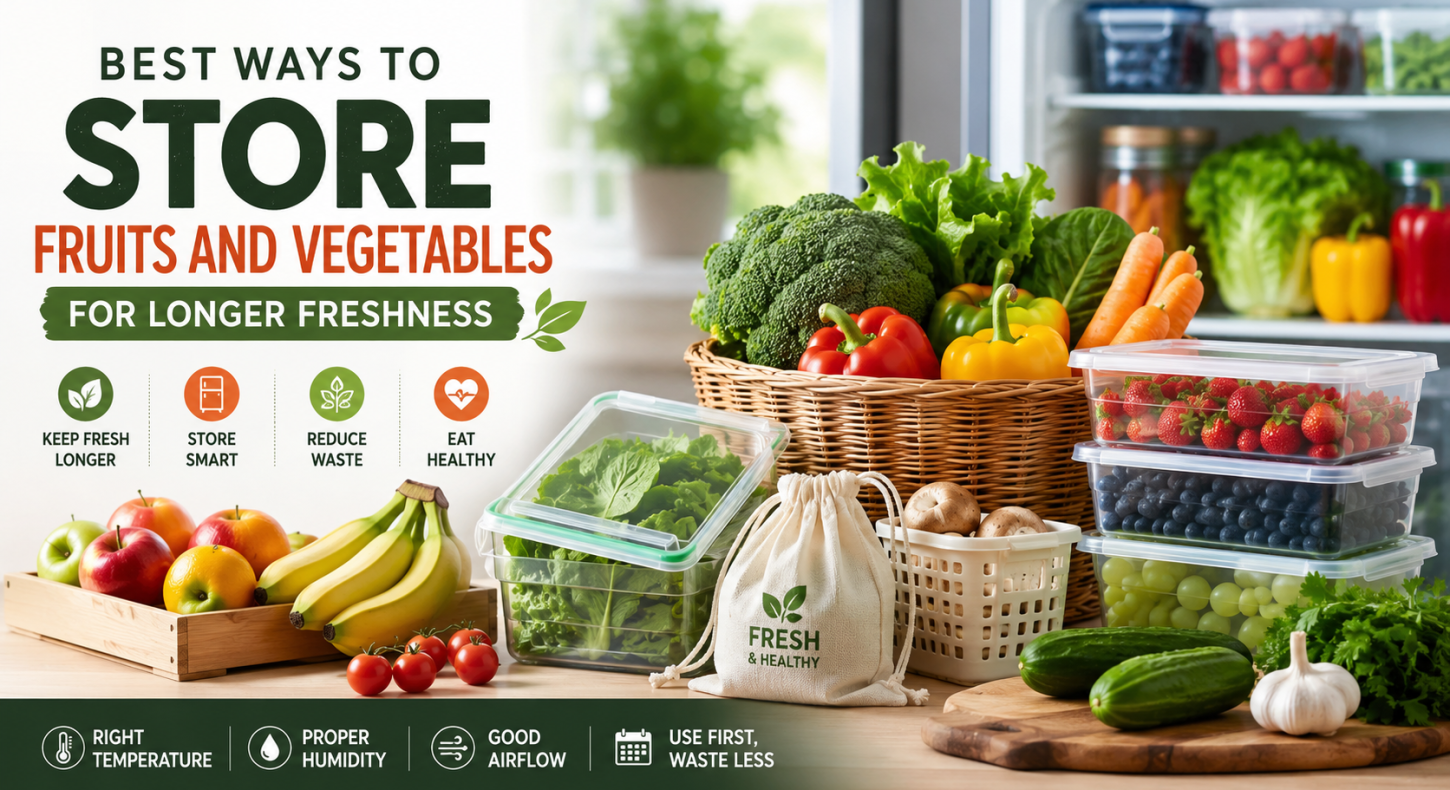

Best Ways to Store Fruits and Vegetables for Longer Freshness
Keeping fruits and vegetables fresh for a longer time helps reduce food waste, saves money, and ensures you always have healthy ingredients ready for meals. Understanding the best ways to store fruits and vegetables for longer freshness is essential because different types of produce require different storage conditions. Some fruits stay fresh at room temperature, while others last much longer in the refrigerator.
This guide explains practical storage methods that preserve freshness, maintain nutritional value, and extend the shelf life of your favorite fruits and vegetables.
Why Proper Storage Matters
Fresh produce begins losing moisture and nutrients soon after harvest. Incorrect storage can speed up ripening, encourage mold growth, and cause vegetables to become wilted.
Proper storage helps:
- Keep produce fresh for longer
- Preserve vitamins and minerals
- Reduce food waste
- Save grocery costs
- Improve food quality and taste
Store Fruits and Vegetables Separately
Many fruits release ethylene gas, a natural plant hormone that speeds up ripening. Keeping ethylene-producing fruits away from sensitive vegetables prevents premature spoilage.
Fruits That Produce Ethylene
- Apples
- Bananas
- Avocados
- Mangoes
- Pears
- Peaches
Vegetables Sensitive to Ethylene
- Broccoli
- Carrots
- Lettuce
- Spinach
- Cucumbers
- Green beans
Keeping these foods apart significantly increases freshness.
Use the Refrigerator Correctly
Most vegetables remain fresh longer in the refrigerator.
Ideal vegetables for refrigeration include:
- Carrots
- Broccoli
- Cauliflower
- Bell peppers
- Leafy greens
- Celery
Store them in the crisper drawer, where humidity is higher and moisture loss is reduced.
Avoid washing produce before refrigerating unless you dry it completely, as excess moisture encourages mold.
Store Some Produce at Room Temperature
Not everything belongs in the refrigerator.
Keep these items on the kitchen counter:
- Bananas
- Tomatoes
- Potatoes
- Onions
- Garlic
- Whole pumpkins
Allow fruits like peaches, mangoes, and avocados to ripen naturally before moving them to the refrigerator.
Use Breathable Storage Bags
Plastic bags trap moisture, leading to faster spoilage.
Instead, choose:
- Mesh produce bags
- Paper bags
- Cotton storage bags
- Ventilated storage containers
These allow proper airflow while maintaining freshness.
Wash Only Before Eating
Many people wash fruits and vegetables immediately after shopping.
Instead:
- Store produce dry.
- Wash only before use.
- Remove damaged leaves or spoiled pieces immediately.
Dry produce lasts significantly longer.
Wrap Leafy Greens Properly
Leafy vegetables lose moisture quickly.
To keep them crisp:
- Wash only if necessary.
- Dry thoroughly.
- Wrap in paper towels.
- Place inside an airtight container or storage bag.
Paper towels absorb excess moisture and prevent slimy leaves.
Keep Herbs Fresh
Fresh herbs require special care.
For parsley and cilantro:
- Trim the stems.
- Place them in a glass with water.
- Cover loosely with a plastic bag.
- Refrigerate.
For basil:
- Store at room temperature in water like fresh flowers.
Store Potatoes and Onions Separately
Although both prefer cool, dark places, storing them together causes faster spoilage.
Best practice:
- Keep potatoes in a ventilated basket.
- Store onions separately in another dry location.
- Avoid direct sunlight.
Freeze Extra Produce
If you cannot use produce before it spoils, freezing is an excellent solution.
Suitable vegetables include:
- Broccoli
- Spinach
- Green beans
- Peas
- Corn
Many fruits also freeze well:
- Berries
- Mango
- Pineapple
- Bananas
Blanch vegetables before freezing for better texture and color.
Organize Your Refrigerator
Follow the “First In, First Out” (FIFO) method.
Place older produce in front so it gets used first. Regularly inspect fruits and vegetables and remove spoiled items before they affect the rest.
Common Storage Mistakes
Avoid these common errors:
- Washing produce too early
- Storing fruits and vegetables together
- Overcrowding the refrigerator
- Using sealed plastic bags without airflow
- Ignoring spoiled produce
- Refrigerating items that prefer room temperature
Correcting these habits helps extend freshness significantly.
Conclusion
Learning the best ways to store fruits and vegetables for longer freshness is one of the simplest ways to reduce waste and enjoy healthier meals. By storing produce according to its specific needs, separating ethylene-producing fruits from sensitive vegetables, using proper containers, and maintaining refrigerator organization, you can keep your fruits and vegetables fresh for days or even weeks longer.
Following these practical storage techniques will help you save money, minimize food waste, and always have fresh, nutritious ingredients available in your kitchen.

